
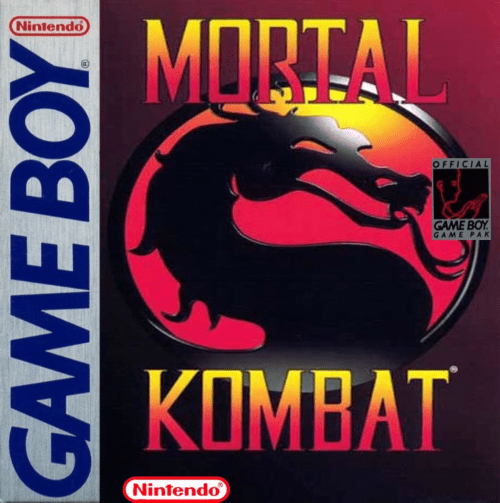
As some of the more astute readers may have realized by now, in this extra installment of MK Retrospektive I’ll be taking a look at the handheld versions of the various Mortal Kombat games. I admit up front that I have not played all of these, so I won’t be going into as much depth as I usually do. The main focus is going to be on the first couple of Game Boy and Game Gear versions, but we’ll be taking a look at every handheld MK game to date. Be forewarned, some of these will not be pretty.
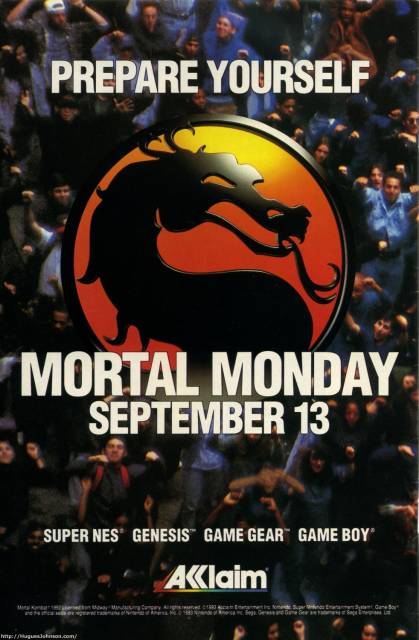
The home console versions of the original Mortal Kombat were released on September 13, 1993, commonly called “Mortal Monday” (in the US, anyway — we filthy Euros got to wait a bit longer). Acclaim spent millions on promoting these releases, and while the focus obviously was on the 16-bit console versions, the SNES and Genesis versions weren’t the only MK ports released on Mortal Monday. Nintendo’s Game Boy was hugely popular at the time and Sega’s Game Gear also had a decent following, so Acclaim obviously figured that they might as well try to squeeze some cash out of the handheld gaming audience.
The Game Boy and Game Gear conversions were developed by Probe Software in the UK, who also did the Genesis, Sega CD and Amiga versions as well as the later Master System port. Also, this has nothing to do with anything, but the PC DOS version (well, one of them, as the floppy disk and CD-ROM versions were slightly different) was developed by a company called Ultratech. Thanks a bunch ARIA, that version was really good!
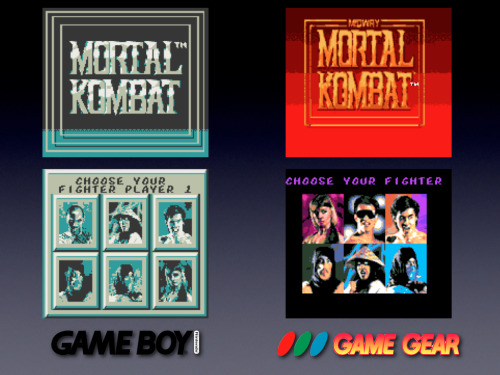
Now, let’s face it: the 16-bit consoles were far less powerful than the original arcade hardware and couldn’t really recreate the visuals and audio which were so important for the original Mortal Kombat, so how in the blue hell would this game work on an 8-bit handheld system that has only two action buttons? Well, the short answer to that is “poorly”. The long answer would be “extremely poorly”. Graphics and sound are one thing (although there are some nice chiptunes here), but the main issue with these ports is the fact the controls suffer from horrific input lag and poor frame rate, making the game almost unplayable. The Game Boy version’s obvious lack of color also means it can be hard to tell which ninja is yours.
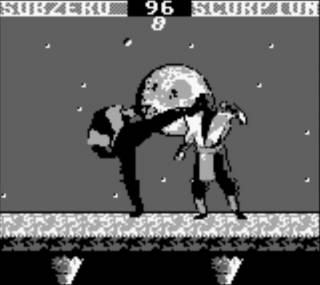
Both versions omit one of the main characters (Cage on Game Boy and Kano on Game Gear) as well as Reptile, although the Game Boy port is somewhat notable for being the only version of MK1 that lets you play as Goro. Hooray! Naturally, there’s no blood on the Game Boy, but the Game Gear does feature the blood code for all your blocky red pixel needs.
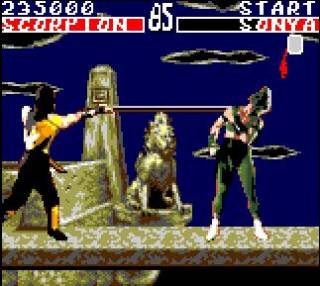
Acclaim, being Acclaim, wasn’t even slightly concerned about the fact the portable MK1 ports were utterly hideous. They apparently sold quite well thanks to brand recognition so when the home versions of Mortal Kombat II rolled around in 1994, the Game Boy and Game Gear were getting their own ports with Probe at the helm once more. Both portable versions cut the playable roster down to eight characters (Kung Lao, Johnny Cage, Baraka and Raiden are omitted) and Noob Saibot is missing, as is Kintaro from the GB version.
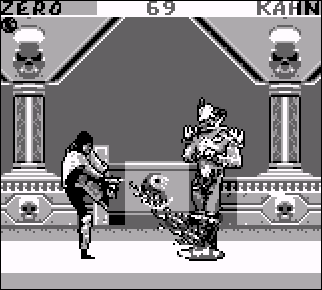
Surprisingly, the Game Boy version is actually quite decent. The graphics still aren’t great and the animation still lacks frames (and of course, the lack of color remains a problem), but the controls are orders of magnitude better than the MK1 port. It’s actually very playable now, and I was even able to pull off things such as dodging Kitana’s fan throw with Mileena’s teleport kick quite reliably.
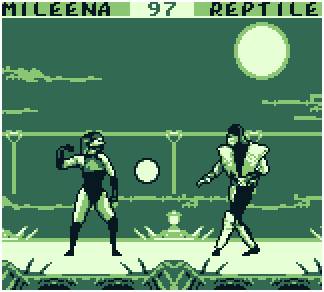
MKII on Game Boy is a perfectly acceptable handheld version of one of my favorite games, and had I owned it back in the day I’d probably have spent a lot of time playing it during recess (and possibly during class). MK and MKII were later released on a single Game Boy cartridge, imaginatively titled Mortal Kombat & Mortal Kombat II. This release appears to be something of a collector’s item nowadays.
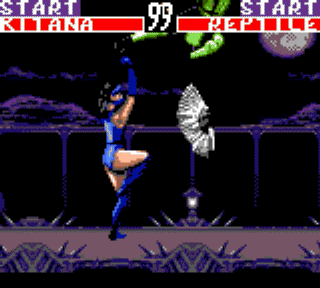
I haven’t played the Game Gear version so I can’t really speak of its quality, but from what I’ve seen it appears to be a slow, sluggish mess with entirely too large character sprites and about three frames of animation. The Master System version is the same game, albeit with a less cramped screen.
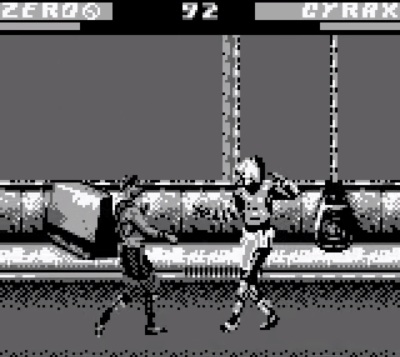
Mortal Kombat 3 was once again ported to the Game Boy and Game Gear, although the Game Gear version was only released in Europe and is now rare and expensive and entirely not worth the outrageous prices on online auctions. Probe, who had done a good job with the MKII port on Game Boy, was not hired for these ports (being too busy working on quality projects such as Batman Forever and Judge Dredd), and fellow UK studio Software Creations were given the reins.
Software Creations, of course, initially made a name for themselves with quality ports of arcade games for the 8-bit home computers in the 80s, although by this point they were better known for developing a bunch of lackluster licensed games. Later, they developed the staggeringly awful Carmageddon 64 for Titus/Interplay, although admittedly that one wasn’t really their fault as the whole project was a poorly managed mess and the state of the final game reflects that.
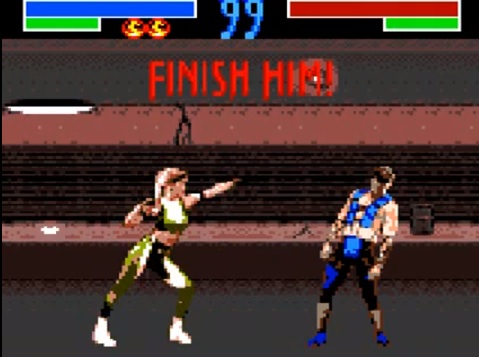
So, how do these versions measure up? Not particularly well, I’m afraid. While I haven’t tried the Game Gear version, MK3 on Game Boy is far worse than the MKII port and not worth bothering with. The engine would be reused for the Game Boy Color port of MK4 later.
Ultimate MK3 did not get a portable version until some years later (and it would take even longer for a decent portable version to appear), but Mortal Kombat Trilogy actually did get a handheld port shortly after its initial release. This one wasn’t on the Game Boy or Game Gear, though, but something far more sinister…

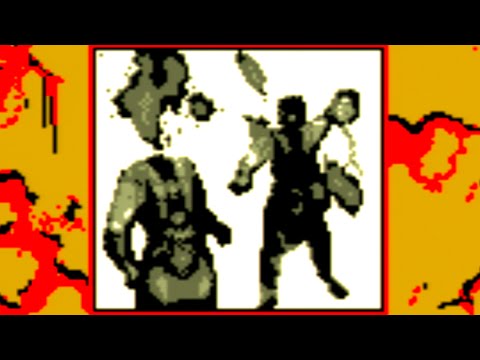
For those of you who have managed to remain blissfully ignorant of the game.com, allow me to ruin everything. The game.com, pronounced “game com” for some reason, was an attempt by Tiger Electronics (known for making many, many bad LCD handheld games throughout the 80s and 90s, including some Mortal Kombat ones) to compete directly with the Game Boy with their own cartridge-based handheld that had touchscreen and internet capabilities that admittedly were very much ahead of their time (and very rough as a result). Tiger secured licenses for several popular game properties including Resident Evil, Sonic the Hedgehog, Duke Nukem and, of course, Mortal Kombat. All game.com games were programmed in-house at Tiger. All game.com games were also extremely bad, and Mortal Kombat Trilogy is no exception.
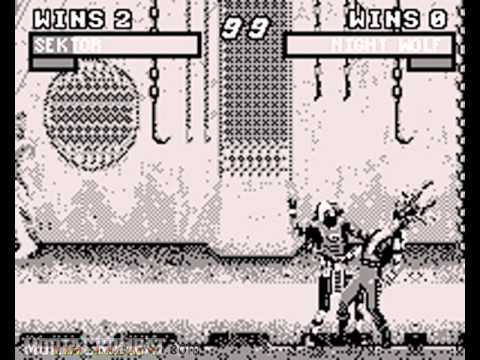
The graphics are nice enough for an old handheld version (at least in screenshots, where you can’t see the janky animation), but from everything I’ve gathered, that’s about the only good thing about this port. Even if it were okay, that wouldn’t matter because you can’t see shit on the game.com’s screen. The above screenshot is from a Youtube video where some poor bastard plays the game on an emulator, but if you were to play it on an actual game.com, the experience would be a horrible blurry mess with audio that could best be described as random plinks and plonks. Which, of course, is how all game.com games sounded. The great Stuart Ashen, connoisseur of terrible old games you’ve probably never heard of, once described the sound in a different game.com game as follows: “When you die and go to hell, this is the music that plays on the elevator.”
Naturally, the game.com failed miserably. Tiger attempted to salvage things with a revised model that was smaller and had a (slightly) better screen, but to no avail. The legacy of the game.com is that of an embarrassment and a punchline, with many gaming pundits over the years beating it and its game library with sticks of varying sizes. The worst part of all this is that you can’t even make jokes about the game.com in YouTube comments or Twitch stream chat because they parse its name as a link. Utterly appalling.
Now that we’re firmly in the trainwreck portion of this retrospective, let’s continue with the Mortal Kombat 4 port I mentioned earlier!
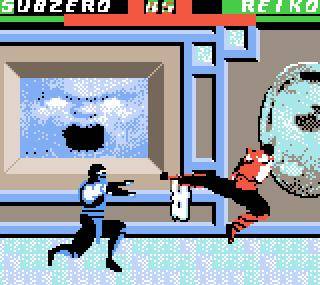
This Game Boy Color release uses the engine from (and plays just as bad as) the Game Boy version of MK3, but somehow manages to look even worse (I spent some time trying to find a screenshot that looked halfway presentable, but gave up because it wasn’t happening… I really should update all the screenshots in these old articles and replace all the ones I stole from the internet). The huge selling point — insert the world’s biggest air quotes — of this version were the FMV Fatalities, which would show clips of the fatalities from the arcade version. Well, in theory anyway.
I think that’s supposed to be Sub-Zero doing the spine rip. Might also be literally anything else, like two bears high-fiving or a drug-induced hallucination. Suffice to say, this port didn’t fare too well. Neither did Mortal Kombat Advance, released just in time for the Game Boy Advance’s launch in 2001 and, as we’ve mentioned in an earlier article, being so terrible EGM had to revise their scoring system to accommodate a low enough score.
This port of the 16-bit UMK3 was developed by a company called Virtucraft, and many have tried to understand just what went wrong because not only is the gameplay completely broken with countless bugs and infinite combos, but the tech here is also barely above Game Boy Color level. Virtucraft was not known for amazing games by any means, but they were a competent enough studio that made some perfectly playable Game Boy titles in their day. Presumably, this was horrendously rushed in order to meet the GBA’s launch date.
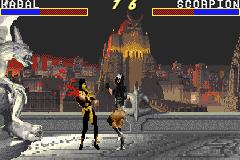
When Mortal Kombat rose from the pits in 2002 with Deadly Alliance, the console versions were accompanied by a Game Boy Advance port that retains the 3D style gameplay but uses sprite graphics for everything. Two Game Boy Advance ports, actually; one bearing the Deadly Alliance name and another called Mortal Kombat: Tournament Edition. The latter is somewhat notable for being the first and only MK game not to include Sub-Zero at all, since he’s in the other version. It’s also the first one to include Sareena as a playable character, in case someone cares about that. I doubt anyone actually does, but I thought it should be mentioned nonetheless.
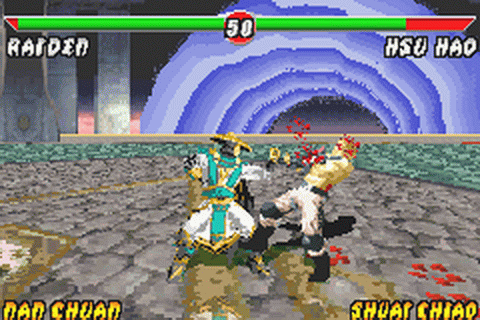
I haven’t played either of these, but the gist of things is that they are basically two halves of one game, with each having a different cast of characters. The fighting styles from the main console versions are retained, and you can still unlock things in the Krypt. At any rate, they seem to be a lot better than the previous attempt on GBA, but so is norovirus so that’s not really an accomplishment.
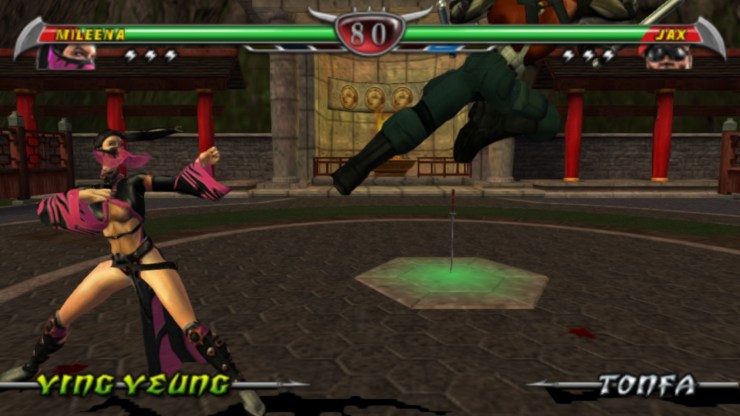
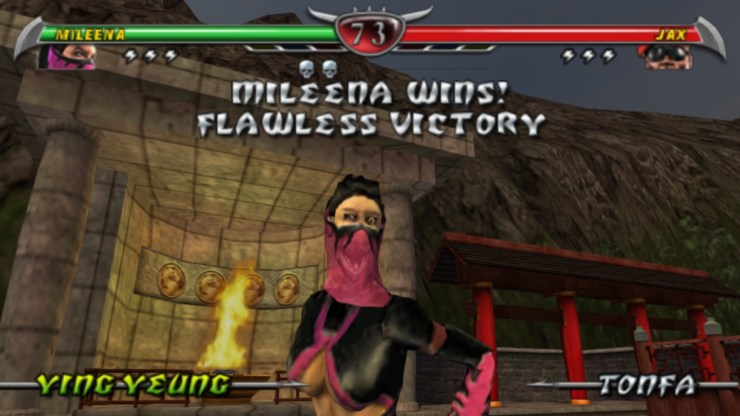
I’ve already talked about Mortal Kombat: Unchained in the Deception retrospective, but let’s go over it once more: this is a very good PSP port of the console game and worth looking at if you like Deception. All the content is there, and even some extra characters are included. The graphics can look a bit crummy at points (check out the screenshot below) and it doesn’t run quite as smoothly as the console versions, but for the PSP it’s a good effort. Not nearly as good as the absolutely stellar PSP port of Tekken 5: Dark Resurrection which was released around the same time, but no slouch either.
Ultimate Mortal Kombat 3 finally got a respectable handheld version in 2007, when it showed up on the Nintendo DS. This version, simply titled Ultimate Mortal Kombat, was meant to include MKII, MK3 and Puzzle Kombat from Deception, but MKII didn’t make the cut and MK3 was (wisely) replaced with UMK3.
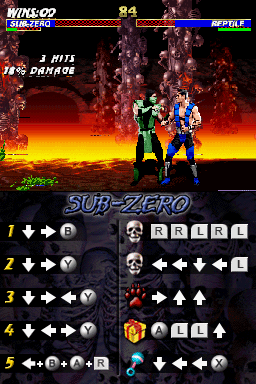
The visuals aren’t quite as crisp as the arcade version, but aside from that UMK is a very faithful port of the classic game. Puzzle Kombat is also pretty much unchanged from its initial appearance aside from the graphical downgrade (which, while obvious, is not too bad because the super-deformed Puzzle Kombat models lend themselves well to a lower-poly presentation), and both modes use the second DS screen as well.

Finally, there’s the PS Vita version of 2011’s Mortal Kombat. I covered this one in the MK2011 article, and everything I said there still applies. While the graphics have taken an obvious hit (which is even more obvious if you’re looking at screenshots), the gameplay is exactly as it is in the console and PC versions and there’s some bonus content as well. An extremely solid port of a fine game.

UPDATE UPDATE UPDATE: In 2019, Mortal Kombat 11 (not to be confused with Mortal Kombat 2011) was released on all then-current platforms, including the Nintendo Switch. Much like the Vita version of Mortal Kombat 2011 (not to be confused with Mortal Kombat 11), this is a feature-complete port and targets the same 60 frames per second as its home console brethren, which required quite a bit of tweaking because Nintendo’s hybrid system is massively less powerful than the PS4 and Xbox One. Remember, the Switch uses NVIDIA’s Tegra X1, a mobile chipset that was already outdated when the Switch launched in 2017.
As a result, the game runs at very low resolutions and the visuals have taken a huge hit especially in the Krypt, but it does hit its 60 fps target for the most part and plays as well as could be hoped for. The Mortal Kombat 11 Ultimate version is also available, packing all the DLC into one bundle that can be bought separately or packaged together with the main game.
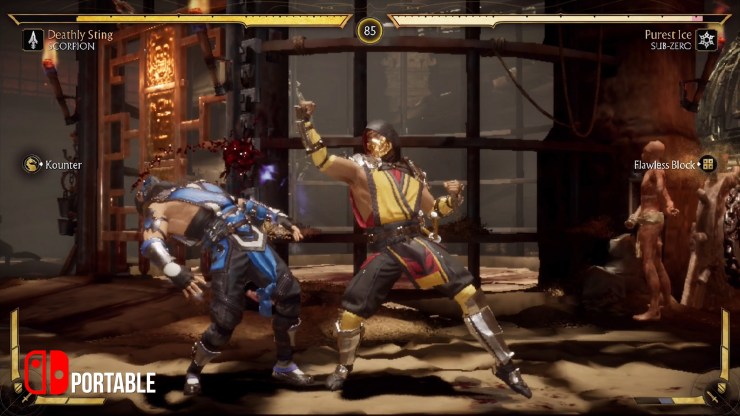
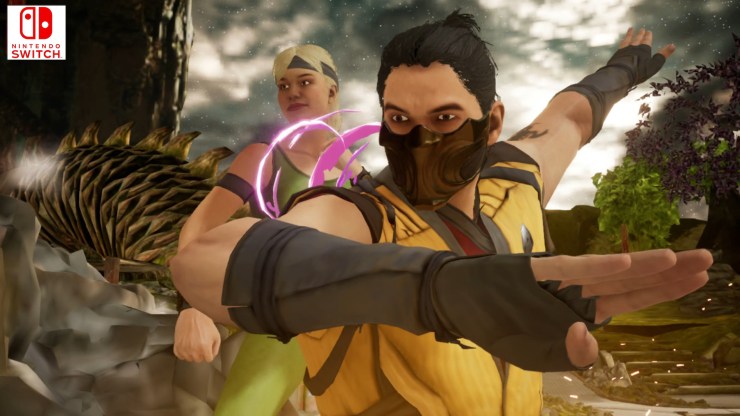
UPDATE UPDATE UPDATE UPDATE: In 2023, WB released the latest game in the series, Mortal Kombat 1 (great title there, lads) on the Switch. Considering the fact this was a PlayStation 5 and Xbox Series X|S title without PS4 or Xbox One versions and made use of the advanced features and fast SSDs on the current machines, this port by Shiver Entertainment and Saber Interactive was probably always doomed.
I am actually yet to play any version of Mortal Kombat 1 although I do have it on the Series X, but the Switch version gained quite a bit of notoriety at launch because it looked horrible, took ages to load, was full of visual bugs, and didn’t even run well to make up for its visual shortcomings as the frame rate would tank to the 20s whenever the new Kameo assists came to play. They may have smoothed out some of the more glaring issues since then, as Ed Boon did promise the port would be fixed, but even then this is not a version I’d want to spend my money on.
Whew! That’s about it for Mortal Kombat on handhelds. There is also the iOS version of UMK3 and the Midway Arcade Treasures emulations on PSP, but I didn’t consider those notable enough to warrant a closer look. Well, the game.com isn’t notable either, but at least it’s amusing because it’s so awful.

 3rd Voice Gaming
There is also a quality fan port of Ultimate Mortal Kombat 3 being made for Game Boy Color, which you can see here as the ‘UMK3 GBC Project’: https://twitter.com/PortableMK